 Skip-the-line available
 What to See at Château de Villandry — Gardens and Château
The six gardens, the maze and the Renaissance interior — and an honest guide to which ticket covers what.
Villandry is unusual among the great Loire châteaux in that most visitors come for the grounds rather than the rooms. The estate is laid out as six distinct garden 'rooms' across terraces above the river, each with its own character and history, plus a furnished Renaissance interior in the château itself. Because there's a Gardens-only ticket alongside the combined Château + Gardens ticket, it's worth understanding honestly what's in each half before you decide which to book.
The Potager — the World-Famous Ornamental Kitchen Garden
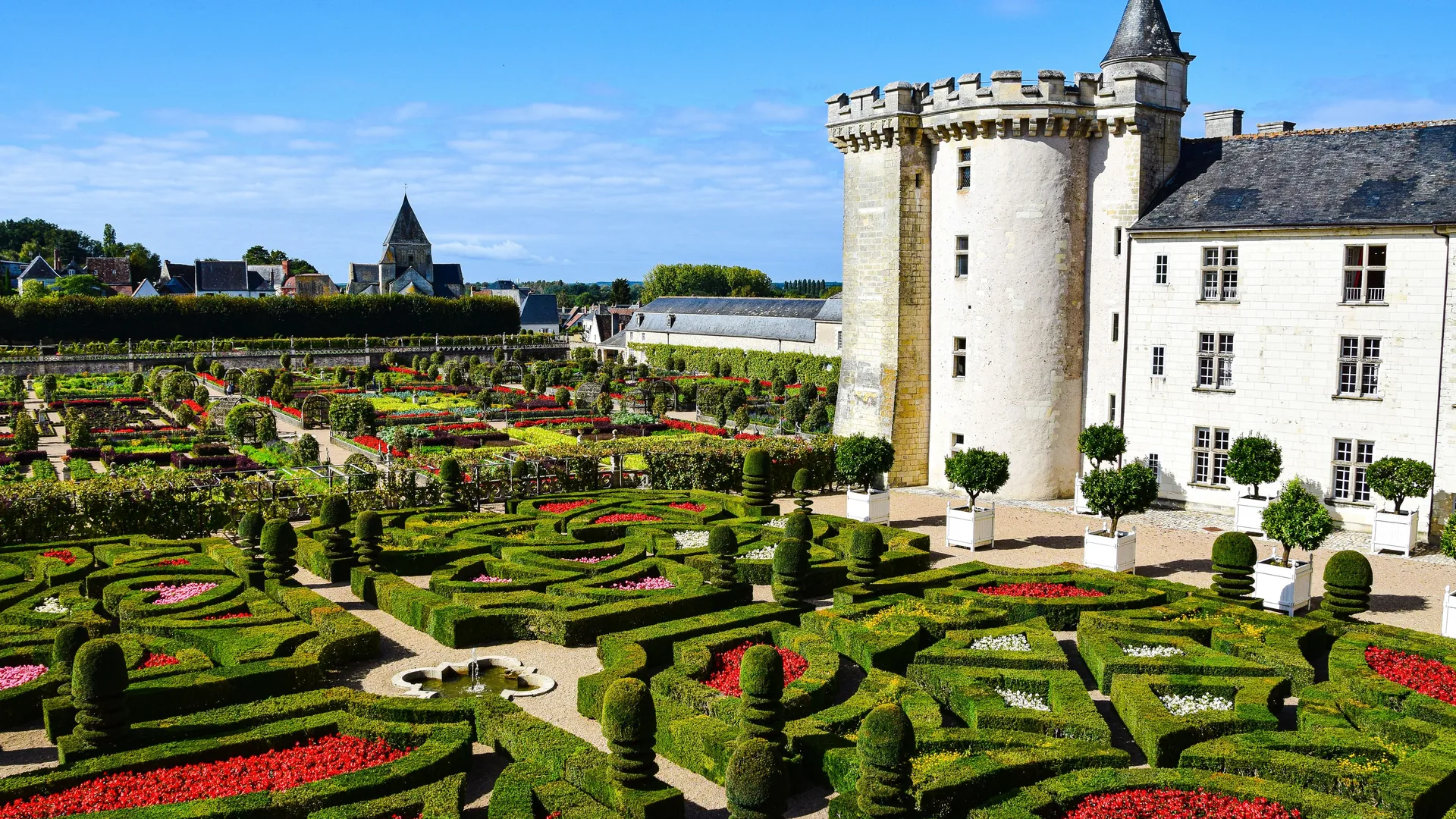
This is what Villandry is known for: a working vegetable garden laid out as pure ornament, divided into nine large squares of equal size but different geometric patterns, framed by box hedges and gravel paths. Around 40 species of vegetable from eight plant families are chosen and arranged for colour and form rather than yield alone — the classic combination is blue-green cabbages against burgundy lettuces, orange pumpkins beside purple eggplants. It's replanted twice a year, once in spring and once for the main summer display, so the same nine squares look genuinely different in April and August.
The best view of the potager isn't from within it — it's from above, on the upper terraces or from the château's 14th-century keep, where you look straight down onto the full geometric pattern. If you only have time for one part of the visit, this is it: it's the reason Villandry has a claim to being the most photographed kitchen garden in the world.
The Garden of Love — Renaissance Symbolism in Box Hedge
On the ornamental terrace, the Garden of Love is laid out as four box-hedge squares, each representing a different kind of love. Tender Love is shown as four hearts separated by small flames, with masks at the centre — the kind worn at balls to allow anonymous conversation. Passionate Love uses hearts broken by passion, its box clumps tangled into a maze-like whirl. Fickle (flighty) Love uses fans, wings and butterflies in the corners with horns representing betrayed love, picked out in yellow — the traditional colour of betrayal. Tragic Love is the starkest: box clipped into duelling dagger blades, with red flowers standing in for bloodshed.
It's a genuinely rare survival — a piece of Renaissance garden symbolism you can actually read on the ground, not just in a guidebook — and it sits right beside the Music Garden (the second 'ornamental salon') and the herb garden, making the whole terrace worth slow walking rather than a quick photo stop.
The Water Garden, Sun Garden and the Maze
The water garden occupies the highest terrace: a large calm pool in a classical Louis XV style, framed by lawns, used historically as a reservoir and now simply as the estate's most tranquil, reflective spot — a deliberate contrast to the geometric intensity of the potager below. Nearby, the sun garden is a more recent addition of warm-toned plantings, and it's also where the estate's children's playground sits, making it the natural pause point for families partway through the visit.
The maze, on the second terrace beside the Garden of Love, is cut from green hornbeam hedges in a square layout. The medieval idea behind it is deliberate: a twisting, uncertain path standing in for the choices of life, leading to a central wooden observation tower where you can look back down over the pattern you just walked. It's genuinely popular with children and adults alike, and a shortcut exists for anyone who wants the view without the full wander.
The Château Interior — What Château + Gardens Adds
The château itself was built around 1536 for Jean Le Breton, a minister under François I, incorporating a surviving 14th-century keep from an earlier fortress on the site — the same keep where, centuries before, Philip II of France and Richard I of England once met to discuss peace. The Renaissance building passed through several owners, was confiscated during the Revolution, and by the early 1900s had fallen into disrepair before Joachim Carvallo bought it in 1906 and restored both house and gardens to something close to their present form.
The Château + Gardens ticket adds entry to the furnished interior and, importantly, the keep — which is where you get the best elevated view straight down over the potager's nine squares. If your main interest is the gardens and you're short on time, the Gardens-only ticket covers everything described above; if you want the historical interior and the classic aerial view of the pattern, choose Château + Gardens.
Frequently asked
What's the difference between the Gardens-only and Château + Gardens tickets?
Gardens-only covers all six gardens — the potager, Garden of Love, water garden, sun garden, herb garden and maze. Château + Gardens adds the furnished Renaissance interior and the 14th-century keep, which gives the best elevated view over the potager.
What is the Garden of Love at Villandry?
Four box-hedge parterres, each depicting a different kind of love — Tender, Passionate, Fickle and Tragic — using symbols like hearts, masks, fans, horns and dagger blades. It's one of the few readable pieces of Renaissance garden symbolism still on public display anywhere.
Is the maze suitable for all ages?
Yes — it's a square hornbeam-hedge maze with a shortcut to the centre, so both children racing to the observation tower and visitors who just want the view can enjoy it.
Where's the best view of the potager?
From the upper terraces or, if you have the Château + Gardens ticket, from the 14th-century keep — both give you the full aerial view of the nine geometric squares.
How long does it take to see everything?
Allow around 1.5–2 hours for the gardens and château together; garden enthusiasts often spend longer, especially in peak planting season.